 English
 KR
KR  IA
IA  JP
JP 


Frequently Ask Questions
Restore Movement. Relieve Pain. Reclaim Life.



Frequently Asked Questions
Manual therapy utilizes targeted joint mobilization and gentle traction to reduce intradiscal pressure. This decompresses the affected nerve root, alleviates muscle guarding, and accelerates natural tissue healing.
While manual therapy cannot alter adult structural bone curvature, it is a key management strategy. It successfully reduces asymmetric myofascial tension, improves spinal mechanics, and significantly mitigates chronic discomfort.
For age-related cervical degeneration, therapists apply gentle joint glides and passive stretching. This targeted approach restores range of motion, enhances local circulation, and relieves pressure on cervical nerves.
Treatment identifies and releases chronically shortened, overactive muscles while mobilizing restricted joints. This restores optimal biomechanical alignment, creating the necessary foundation for corrective exercise.
Therapists utilize specific joint distractions and capsular stretches to gradually break down fibrotic adhesions. The treatment is closely monitored to progressively restore shoulder mobility within patient tolerance.
Yes. Manual therapy reduces median nerve compression by mobilizing the carpal bones and applying myofascial release to tight forearm musculature, offering a non-invasive solution for numbness and pain.
Both are repetitive strain injuries, but they affect opposite sides of the joint. Tennis elbow involves inflammation of the outer elbow tendons from wrist extension, while golfer’s elbow affects the inner tendon group from wrist flexion.
Treatment utilizes deep tissue friction massage to stimulate tendon remodeling, combined with forearm mobilization to eliminate repetitive mechanical stress at the attachment site.
By addressing the root biomechanical cause. Therapists optimize patellar tracking and restore joint mechanics through targeted mobilization, paired with deep tissue release of the quadriceps, hamstrings, and iliotibial band.
Yes. Specialized prenatal manual therapy safely addresses pelvic girdle and sacroiliac joint dysfunction caused by hormonal laxity, stabilizing the pelvis and releasing overactive supporting muscles.
For strains and sprains, manual therapy controls inflammation, prevents restrictive scar tissue through cross-friction techniques, and safely restores joint mobility to expedite a return to play.
It counteracts the prolonged flexed riding posture. Treatment focuses on opening the hip flexors, releasing the piriformis, and mobilizing the thoracic spine to improve comfort and aerodynamic efficiency.
Patients may experience transient pressure or localized discomfort during deep tissue remodeling or joint mobilization. Techniques are always modulated to stay within a therapeutic, manageable threshold.
Standard massage focuses on general relaxation and superficial circulation. Manual therapy is an advanced, evidence-based clinical intervention aimed at treating specific orthopedic, neurological, and joint dysfunctions.
When administered by a licensed clinician following a thorough diagnostic screening, the risk is minimal. Treatment avoids high-velocity rotation of unstable segments, focusing instead on safe, decompressive movements.
Mobilizing restricted joints and stretching deep fascial layers can induce a mild, temporary inflammatory response. This is a normal part of the tissue remodeling process and typically resolves within 24 to 48 hours.
Acute athletic injuries often resolve within 3 to 6 sessions. Complex or chronic conditions—such as frozen shoulder or scoliosis management—require a progressive, structured plan spanning several weeks.
Yes. The treatment plan is strictly modified to exclude high-velocity thrusts. Clinicians utilize low-force soft-tissue mobilization and gentle, active-assisted stretches to ensure absolute patient safety.
Manual therapy restores the structural mobility required for proper alignment. To make these changes permanent, patients must pair clinical care with targeted strengthening exercises and ergonomic adaptations.
Gentle manual therapy can begin within 48 to 72 hours post-injury. Early intervention focuses on lymphatic drainage to reduce swelling and safe, passive movement to prevent joint stiffness.
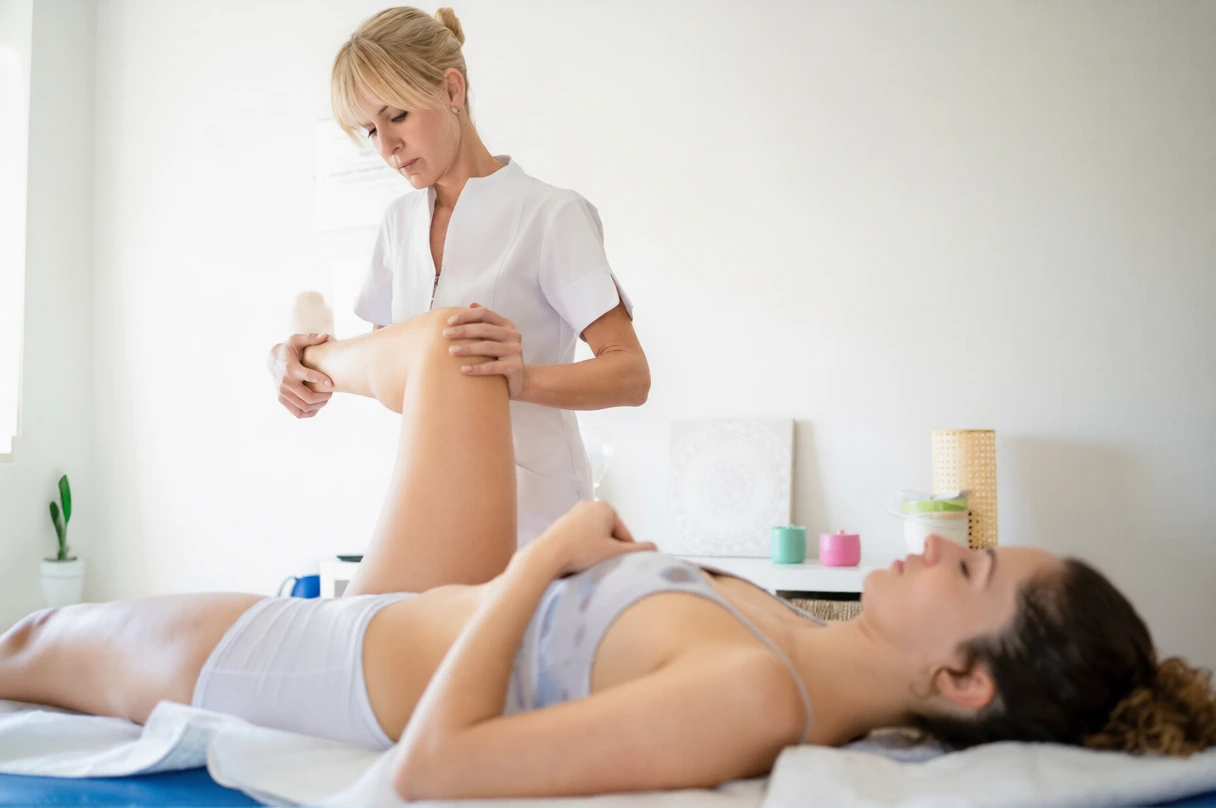
- At Core Clinik, manual therapy is applied using evidence-based techniques to reduce pain, improve mobility, and support safe and effective physical rehabilitation
- Our manual therapy is designed to relieve pain, restore natural movement, and support long-term physical recovery through expert hands-on care
- Manual therapy is more than treating pain it's restoring movement, improving function, and helping patients return to the activities they love
- Healing begins with movement. Through expert manual therapy, we help your body recover naturally, safely, and effectively
Are you having health problems? Contact us today!
Contact Us
Mediverse@example.com
Address Medical
31 New Street, New York, New York , USA
Work Time Information
Monday - Saturday: 7.00am - 19.00pm